
News from Elsewhere

Cycling UK accuse Government of “airbrushing out any role for cycling” in post-covid plans – Cycle Industry News


Liberty Sheldon4 March, 2021

Cycling UK has accused the Chancellor of “airbrushing out any role for cycling in plans for a post-pandemic recovery” in an assessment of his claims that the Government is one “to invest in new infrastructure”.
Previously, Chancellor Rishi Sunak discussed his vision of a budget for the future which he said would impact on successive governments, particularly in cycling and walking investment.
The lack of cycling and walking in his address to Parliament was reinforced in the document outlining the detail of Budget 2021.
Sarah Mitchell, Cycling UK Chief Executive said: “It’s right that the Chancellor sets out his plans for the future wellbeing and prosperity of the nation, but his and the Treasury’s complete disregard for cycling’s role in this future is a complete failure to make good on this Government’s plans to build back better.”
News from Elsewhere

The history behind the filtered permeability in De Beauvoir Town – Hackney cyclist


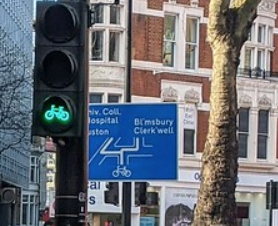
I’ve written before about De Beauvoir Town, which is a very pleasant area of Hackney to live in, for lots of reasons, one of them being due to the extensive “Filtered Permeabilty” (roads which have been closed for through motor traffic but remain open to pedestrians and cyclists) which reduces motor traffic across much of the area to a very low level. This creates quieter conditions for residents, streets where children can play along with an added advantage, due to it’s location, of a direct & quiet East-West cycle route from Islington to Hackney via London Fields along with the so-called Cycle Superhighway 1 which is a not-as-direct-as-the-A10-but-quieter-than-it route from Shoreditch to Dalston.
Towards the end of the 1950’s the Victorian terraced houses on Buckingham Road and Tottenham roads were demolished and replaced by the Kingsgate Estate, opening in the early 1960’s. Shortly later hundreds of Victorian houses, pubs, shops and about half a dozen streets (almost all land between Downham Road and the canal, bar the industrial buildings surrounding the Kingsland Basin) were swept away to make way for The De Beauvoir Estate. 

News from Elsewhere

Voorrangsplein! Part 1 – The Ranty Highwayman


My trip to the Netherlands in 2017 seems a long way in the past and I’m itching to go on another visit. I have no idea when it will be possible and so I have to rely on my photos, Google Streetview and reading up on innovations and there’s another junction type which I didn’t quite manage to see.

I like the Dutch approach to road junction design as it stems from their Sustainable Safety approach. Perhaps the most exotic and lesser known junctions is the wonderfully named “voorrangsplein”, which translates as “priority square”. It’s for use in situations where there are quieter side roads which need connecting to busier main roads where the use of traffic signals and roundabouts are avoided.

News from Elsewhere

Analysis: Fuel-duty freeze has increased UK CO2 emissions by up to 5% | Carbon Brief

The freeze in fuel duty since 2010 means the UK’s CO2 emissions are as much as 5% higher than they would have been, Carbon Brief analysis shows.

The analysis comes amid widespread lobbying and speculation over the future of fuel duty in the UK’s next budget, due to be announced by the new chancellor Rishi Sunak on 11 March.
Fuel duty is currently applied to petrol and diesel sales in the UK at a rate of 58 pence per litre, plus VAT. Instead of rising with inflation, this rate has been frozen since 2010, meaning motorists have enjoyed a large price cut in real terms, even as public transport fares have risen faster than inflation.
If fuel duty had increased each year as planned in the June budget 2010, then pump prices would have been a fifth higher than they are today. Higher prices would have cut CO2 in 2019 by 2-18 million tonnes of CO2 (MtCO2), some 0.5-5.0% of overall UK carbon emissions, Carbon Brief analysis shows.

News from Elsewhere

Climate change: Carbon emission promises ‘put Earth on red alert’ – BBC News


4 hours ago

By Roger Harrabin BBC environment analyst
The world will heat by more than 1.5C unless nations produce tougher policies, a global stocktake has confirmed.
Governments must halve emissions by 2030 if they intend the Earth to stay within the 1.5C “safe” threshold.
But the latest set of national policies submitted to the UN shows emissions will merely be stabilised by 2030.
The UN Secretary-General, António Guterres, called it a red alert for our planet.
He said: “It shows governments are nowhere close to the level of ambition needed to limit climate change to 1.5 degrees and meet the goals of the Paris (Climate) Agreement.
“The major emitters must step up with much more ambitious emissions reductions targets.”

News from Elsewhere

Gloucester’s crap cycle facility and the ambition for active travel – At War With The Motorist


Joe Dunkley February 5, 2021

Gloucestershire lost out on funding in the latest round of DfT active travel grants. Instead of wasting everyone’s time appealing the decision, they should reflect on why.
So the Department for Transport (DfT) have been delivering on their promise to withdraw funding from any council-led active travel projects that don’t meet minimum design standards. Gloucestershire County Council (GCC) are reportedly appealing against one such decision. But the DfT were absolutely right to turn Glos down, and GCC should instead try to learn why. Let’s have a go at that together — there might be something we can all learn from their experience.

News from Elsewhere

Fossil fuel emissions in danger of surpassing pre-Covid levels | The Guardian


International Energy Agency data shows steady climb over second half of 2020
Jillian AmbroseTue 2 Mar 2021

The world has only a few months to prevent the energy industry’s carbon emissions from surpassing pre-pandemic levels this year as economies begin to rebound from Covid-19 restrictions, according to the International Energy Agency.
New figures from the global energy watchdog found that fossil fuel emissions climbed steadily over the second half of the year as major economies began to recover. By December 2020, carbon emissions were 2% higher than in the same month the year before.
The return of rising emissions began only months after Covid-19 triggered the deepest slump in carbon dioxide output since the end of the second world war, and threatens to dash hopes that the world’s emissions might have peaked in 2019.

Scroll to Top